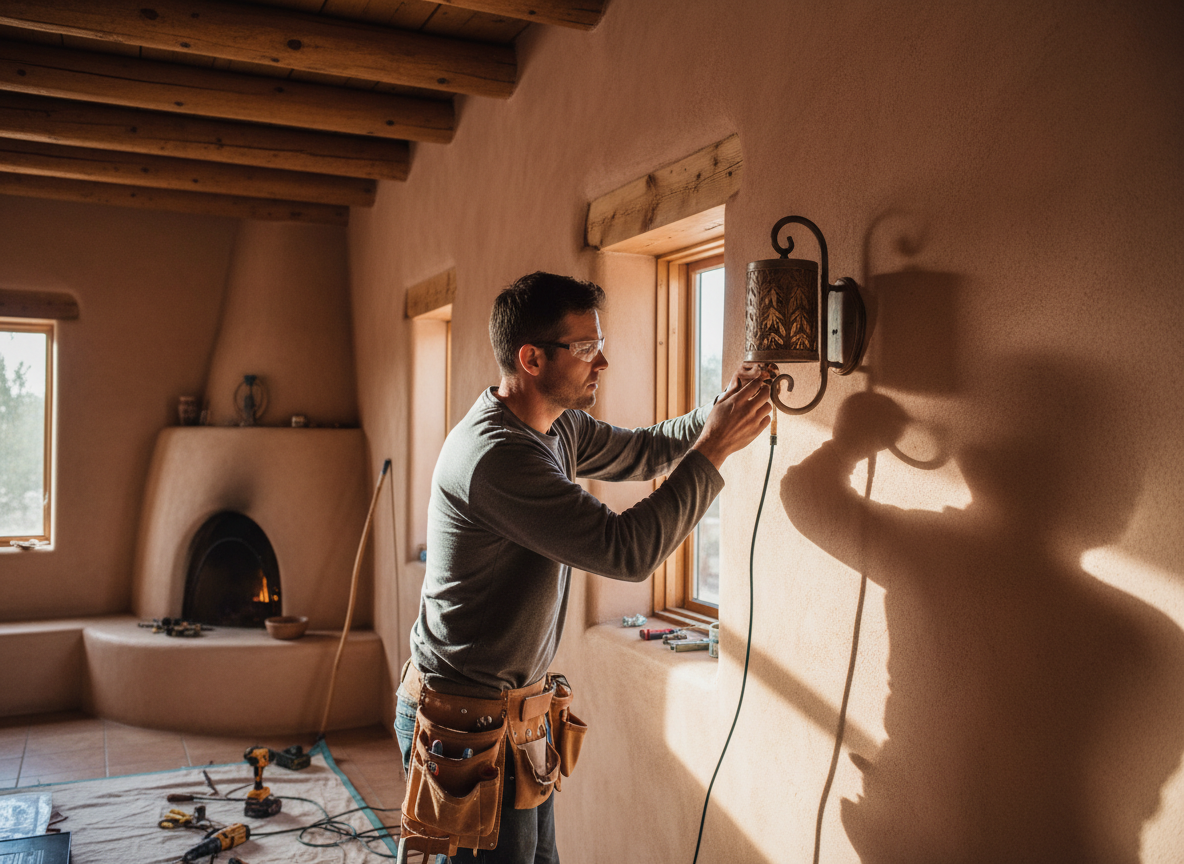
Santa Fe's high-desert winters bring repeated freeze-thaw cycles that stress supply lines and shutoff valves behind fixtures. In older Eastside and Canyon Road homes, galvanized or polybutylene lines often sit behind plaster walls, so any new installation requires checking for hidden corrosion before mounting. Downtown and Railyard District properties built before 1970 frequently have shallow wall cavities that limit standard rough-in depths, forcing custom escutcheon plates or offset valves.
Water pressure in Santa Fe County varies sharply between gravity-fed canyon lots and pump-supplied subdivisions near Albuquerque. Fixtures with aerators or cartridge valves must be matched to actual static pressure or they leak within months. Rocky soil around many Eastside addresses also means exterior hose-bib installations need deeper sleeves and heat tape to prevent burst lines during overnight freezes.
When replacing a kitchen faucet in a historic Santa Fe Plaza-area adobe, the existing supply stops are often soldered or compression-fit on ½-inch copper that has work-hardened. Cutting those lines cleanly without disturbing the surrounding mud plaster requires slow-feed cutters and temporary bracing. After the new fixture is seated, we flush each line at full volume to clear sediment before final aerator installation.
Shower valve replacements in Railyard District lofts often involve tile-over-tile walls where the original mixing valve sits too shallow for current code setbacks. We pull the valve body, extend the copper stubs with sweat couplings, and reset the new cartridge valve at the proper depth so the trim plate sits flush without caulk gaps that invite moisture behind the wall.
Technician insight
In Santa Fe the thing that catches most people out with Fixture Installation is the shallow wall cavities in pre-1970 Eastside and Canyon Road adobes; the original stops sit so close to the back of the plaster that a standard modern cartridge valve won't fit without extending the copper first.
Eastside Kitchen Faucet
Homeowner in an Eastside adobe reported a leaking kitchen faucet with corroded stops. We found work-hardened ½-inch copper behind plaster with no shutoff access. After cutting in new quarter-turn stops and extending the lines, the new faucet seated flush without disturbing the original mud plaster.
Fixture Installation Services We Offer
✓Kitchen Faucet Installation
Mount new single- or dual-handle faucets on existing sinks while confirming supply stops and aerator flow rates match Santa Fe's variable pressure.
✓Bathroom Sink Installation
Set pedestal, undermount, or vessel sinks with proper drain assemblies and shutoff valves suited to older Eastside plumbing runs.
✓Toilet Installation
Replace or relocate toilets using wax rings or wax-free seals rated for the cold slab temperatures common in Santa Fe County homes.
✓Shower Valve Replacement
Remove and install pressure-balancing or thermostatic cartridges, extending rough-in depth when needed for tile-over-tile conditions.
✓Outdoor Hose Bib Installation
Install frost-free sillcocks with proper slope and insulation to survive Santa Fe's winter lows without bursting supply lines.
✓Tub Faucet and Diverter Installation
Fit new tub spouts and diverters on copper or PEX lines while verifying wall access in older Canyon Road construction.
Fixture Installation Cost in Santa Fe, NM
| Service | Typical Range | What Affects It |
|---|---|---|
| Kitchen Faucet Installation | $250–$550 | Higher when supply stops must be replaced or access is limited by cabinetry. |
| Toilet Installation | $300–$650 | Includes new wax ring and flange work; rises with floor repair needs. |
| Shower Valve Replacement | $400–$850 | Price moves with tile demolition and depth adjustments in older walls. |
| Outdoor Hose Bib | $200–$450 | Frost-free unit plus trenching or insulation in rocky Santa Fe soil. |
Ranges are typical for Santa Fe, NM and confirmed with an exact written quote before any work starts.
How it works
- 1
Site Assessment
Inspect existing stops, pipe material, and wall depth at the fixture location in Santa Fe homes.
- 2
Fixture Selection
Match cartridge style and connection type to local water pressure and freeze-protection needs.
- 3
Rough-In Preparation
Shut off water, cut or extend lines, and install new stops or valve bodies as required.
- 4
Fixture Mounting And Testing
Secure the fixture, flush lines, check for leaks, and confirm proper operation under full pressure.
- 5
Final Cleanup
Restore wall or tile access points and remove all debris from the work area.
Pricing
Upfront quotes after on-site assessment of pipe condition and access.