Santa Fe’s older housing stock, especially adobes and frame homes built before the 1970s in the Eastside and near the Plaza, often has galvanized or early copper supply lines that corrode from the inside. Cold winter nights routinely drop below freezing, expanding small pinholes into larger failures once the ground thaws. High desert soil shifts with rare but intense summer rains, stressing joints under slabs and along Canyon Road properties where access is tight.
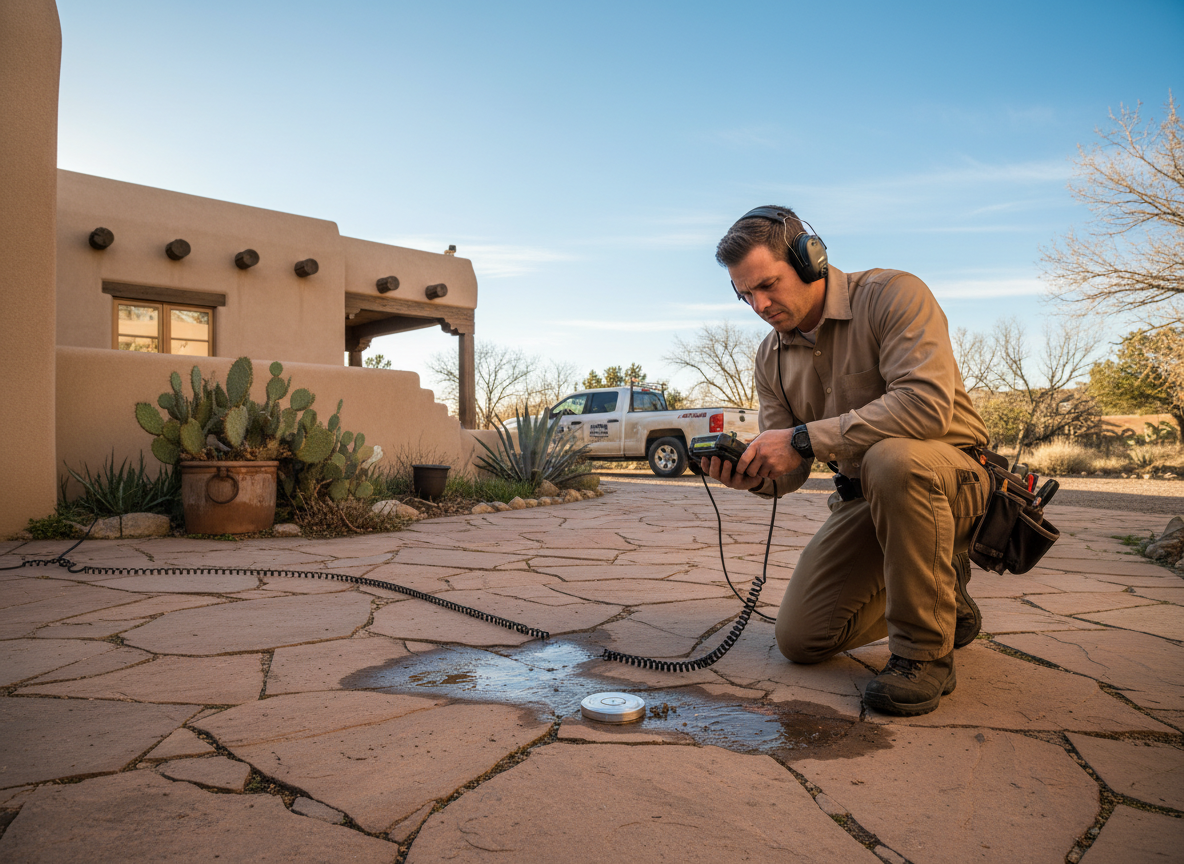
We start with acoustic listening and pressure monitoring rather than excavation because many Santa Fe lots sit on shallow bedrock or have mature landscaping that owners want preserved. When those tools indicate flow without visible moisture, we follow with camera inspection through cleanouts or small access points. This approach avoids unnecessary digging in the Railyard District where utility corridors are dense and permits move slowly.
Nearby Albuquerque and Rio Rancho jobs show different patterns because their newer subdivisions use PEX and have fewer freeze events. In Santa Fe County the combination of age, elevation, and temperature swings means a leak can travel under a foundation for weeks before surfacing. Accurate location prevents repeated repairs that become common when contractors chase water rather than the actual breach.
Technician insight
In Santa Fe the thing that catches most people out with Leak Detection is how our cold winter nights mask slow leaks in older Eastside adobes until the ground thaws and water migrates under the foundation, turning a small copper pinhole into a much larger repair.
Canyon Road Slab Leak
A homeowner noticed rising water use but no wet spots. Acoustic testing pointed to a line under the living-room slab. Camera confirmation showed a hairline crack in 1960s copper. We repaired through a small access pit, avoiding removal of the original tile floor.
Leak Detection Services We Offer
✓Slab Leak Detection
Locate leaks under concrete slabs common in Eastside and Downtown Santa Fe homes without removing flooring or landscaping.
✓Main Water Line Leak Location
Trace leaks on the service line from the meter to the house using acoustic and pressure methods suited to Santa Fe County soil conditions.
✓Fixture and Appliance Leak Tracing
Isolate leaks behind walls or under cabinets at toilets, sinks, and water heaters before they damage historic plaster or adobe.
✓Sewer and Drain Leak Detection
Camera and smoke testing to find cracks in older clay or cast iron lines that run beneath Railyard District and Canyon Road properties.
✓Irrigation System Leak Detection
Check buried valves and lines around Santa Fe yards where summer monsoons and winter freezes create hidden failures.
Leak Detection Cost in Santa Fe, NM
| Service | Typical Range | What Affects It |
|---|---|---|
| Leak Detection Visit | $225–$375 | Covers most Santa Fe homes; higher on hillside or historic lots with limited access. |
| Camera Confirmation Add-On | $150–$250 | Used when acoustic results need visual verification inside lines. |
| Irrigation Zone Check | $175–$300 | Per zone; common on Canyon Road and Eastside properties with separate systems. |
Ranges are typical for Santa Fe, NM and confirmed with an exact written quote before any work starts.
How it works
- 1
On-Site Assessment
Review water bill history and visible clues at the Santa Fe property, noting age of home and recent freeze cycles.
- 2
Non-Invasive Testing
Deploy acoustic sensors and pressure gauges to narrow the leak zone without disturbing landscaping or slabs.
- 3
Confirmation
Use camera inspection or moisture mapping to verify exact location before any excavation or repair begins.
- 4
Repair Options
Present access methods and material choices that fit the home’s construction and Santa Fe County permitting requirements.
Pricing
Diagnostic visits are quoted upfront; final cost depends on access difficulty and whether excavation is required.