2026-11-05 ·
Hard Water Problems in Santa Fe: When to Call a Plumber
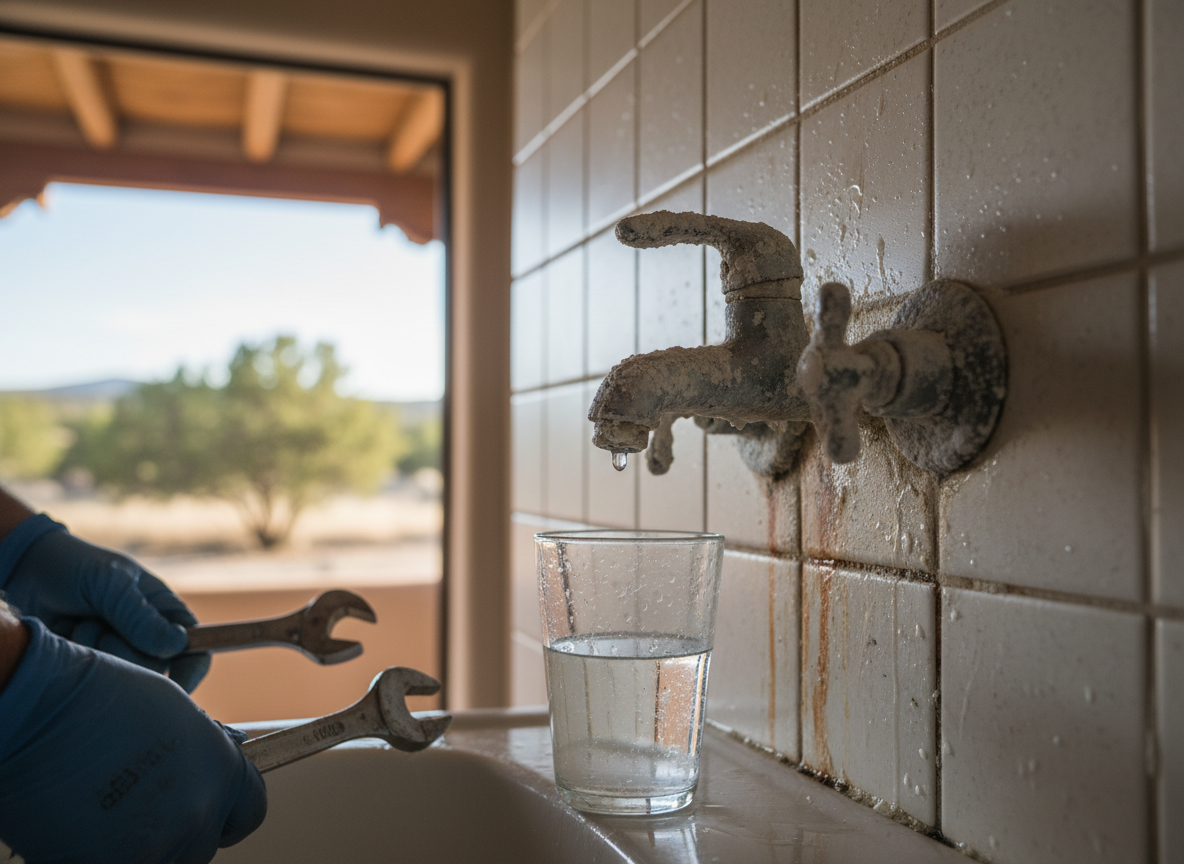
Hard water problems in Santa Fe reach the point to call a plumber once scale coats fixtures, water pressure falls noticeably, or a water heater needs flushing more than twice a year. These signs appear regularly in homes across Downtown, the Eastside, and Canyon Road because Santa Fe County groundwater carries high mineral content that builds up in pipes and appliances. Cold winters make the problem worse when pipes contract and scale loosens, leading to clogs or leaks. Older adobe and frame houses common in the Railyard District often have galvanized lines that trap minerals faster than newer builds near Albuquerque or Rio Rancho. Spotting these changes early prevents larger failures during the next freeze.
Common Signs of Hard Water in Santa Fe Homes
Homeowners notice white or chalky deposits on showerheads and faucets within months of moving into properties near the Santa Fe Plaza or Palace of the Governors. Reduced flow from multiple fixtures at once usually points to scale inside the lines rather than a single clog. Water heaters in high desert homes develop sediment layers that force the unit to run longer cycles, raising energy use. Stains on sinks and tubs appear even with regular cleaning because calcium and magnesium settle quickly in the dry climate. Residents in the Railyard District report these patterns more often than those in newer subdivisions because many homes there still use original plumbing from earlier decades. Checking aerators monthly reveals buildup before it reaches the main lines.
How Hard Water Affects Local Plumbing Systems
Santa Fe's cool summers and cold winters speed mineral accumulation inside water heaters and pipes because temperature swings cause expansion and contraction that traps particles. A standard 40-gallon tank in an Eastside home may need descaling every 6-8 months instead of the yearly schedule common in milder climates. Scale narrows pipe diameter over time, cutting pressure in upstairs bathrooms of two-story Canyon Road properties. Water heaters last 8-12 years under these conditions before elements fail or tanks develop leaks. Homes near the Georgia O'Keeffe Museum often share the same municipal supply, so neighbors experience matching symptoms at similar ages. Linking a water heater repair service early keeps sediment from traveling into fixtures and causing further blockages.
When to Call a Plumber for Hard Water Repairs
Schedule service once a water heater shows temperature swings or takes longer than usual to recover after heavy use. Persistent low pressure across multiple rooms signals scale that simple flushing cannot clear, especially in older Downtown buildings with mixed pipe materials. Leaks at joints or around valves appear after scale cracks during winter freezes, requiring pipe repair before walls suffer water damage. If a toilet or faucet continues to drip after new cartridges are installed, mineral deposits have likely scored the internal surfaces. Residents in Tesuque or Eldorado at Santa Fe face the same county water chemistry and should watch for these patterns. Calling before a full heater replacement becomes necessary saves the cost of emergency weekend work.
Steps to Reduce Hard Water Damage
Flush water heaters twice yearly using a garden hose to remove loose sediment before it hardens. Install aerator screens that can be removed and soaked in vinegar every month to keep flow steady. Check under sinks in the Railyard District for damp spots that indicate slow leaks from scaled fittings. Review the related article on tankless versus traditional water heaters for New Mexico homes to see whether switching units reduces future buildup. Monitor pressure at an outdoor spigot monthly and note any drop below normal levels. These checks help decide when professional leak detection or fixture installation becomes the practical next step rather than repeated DIY attempts.